The Confidentiality Risk in Your AI Productivity Rollout
- 05 Mins read
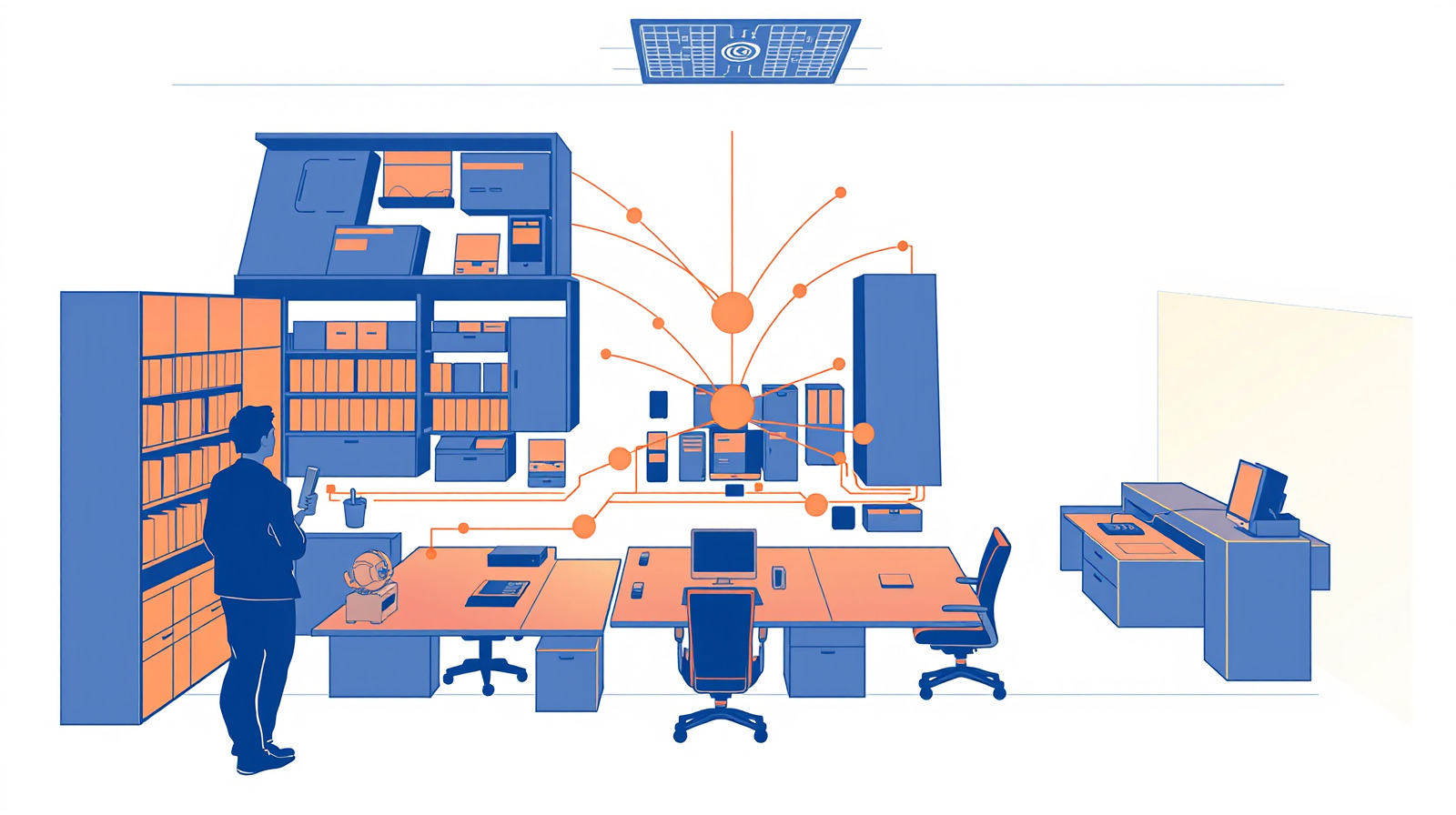
The business case for an organization-wide AI productivity rollout usually focuses on time saved — hours of drafting, summarizing, and searching that employees no longer have to do manually. The productivity math is often compelling. The confidentiality implications rarely make it into the same document.
I am not arguing against AI productivity tools. Most of the organizations I work with benefit from deploying them thoughtfully. I am arguing that the deployment decision and the confidentiality assessment need to happen together, not sequentially, because by the time the confidentiality issues surface in a live deployment, they are substantially harder to address.
There are four areas where confidentiality exposure tends to materialize in AI productivity rollouts, and none of them are obvious from the outside.
The permissions inheritance problem
Most enterprise AI productivity tools integrate with the organization’s existing data. A writing assistant that can access email and calendar content. A search tool that can query across the organization’s document repositories. A meeting assistant that processes conversation recordings.
The integration is the point — the tool needs access to data to provide value. The confidentiality problem is that the access often inherits existing permissions without anyone reviewing what those permissions actually cover.
Organizational data permissions are almost never clean. Documents shared broadly during a project and never restricted afterward. Distribution lists with members who should have rotated off. Legacy permissions on systems that predate the current structure. This is normal; access controls accumulate over time and rarely get regularly pruned.
When an AI productivity tool indexes the content that a user can access, it indexes everything they can access — including the content they technically have access to but were never meant to see in its entirety. When the tool then uses that content to answer queries, generate summaries, or surface relevant information, it may surface content in ways that exceed what the original permission model was designed to permit.
I have seen this manifest in practice: an AI assistant that could search across an organization’s document repositories began surfacing salary data in response to queries about a particular team, because the underlying HR documents were stored in a folder the user had access to for an unrelated historical reason. The user was not trying to find that data. The AI found it for them.
The aggregation problem
Individual pieces of information that are harmless in isolation can be sensitive in combination. AI productivity tools are particularly good at making the combination visible.
An employee with legitimate access to sales pipeline data, client meeting notes, and internal budget discussions does not normally see all of that information together in a synthesized form. They encounter it in different contexts, at different times, through different systems. The totality is there, but the cognitive effort required to combine it provides a natural friction.
An AI tool that can aggregate, summarize, and cross-reference across all of those sources removes that friction. The same employee can now, with a single query, see a synthesized view of their organization’s client relationships, deal economics, and strategic priorities that no single document or system would have surfaced.
This is not a bug in the tool — it is often the primary selling point. The confidentiality question is whether there are categories of information where that aggregation creates an exposure that the access control model did not anticipate. The answer is usually yes, but nobody looked.
The meeting and conversation record
Meeting AI tools — platforms that transcribe, summarize, and make conversation content searchable — have become common in enterprise deployments. The confidentiality implications deserve explicit attention before rollout.
Conversations that participants understood to be informal or confidential in the moment become searchable records. This matters in three contexts that are not always considered during rollout planning.
Board and leadership discussions processed by meeting AI tools create records of deliberations that may need to be protected under legal privilege or governance confidentiality obligations. Whether the tool’s data handling terms are compatible with those obligations is often not reviewed.
Client and partner conversations. Many organizations use meeting AI tools for external calls without explicitly disclosing this to the other party. Depending on jurisdiction, recording requirements vary, but the confidentiality implication extends beyond recording law: the content of client conversations is typically covered by confidentiality obligations in the client relationship. Where that content is stored, who can access it, and what the tool does with it are questions the client may reasonably want answered.
HR and sensitive personnel conversations. Performance discussions, disciplinary matters, and sensitive employee conversations processed by meeting AI tools create records that carry additional obligations around storage, access, and deletion.
The external output risk
AI productivity tools help employees produce external outputs faster. That productivity benefit creates a confidentiality exposure that tends to get overlooked: the risk that AI-assisted drafting incorporates confidential context that the author did not intend to share.
When an employee drafts a client proposal using an AI writing tool that has access to their full communication and document history, the tool may draw on that context in ways the author does not fully control or review. A proposal drafted with AI assistance might reflect information about the organization’s pricing strategy, competitive positioning, or internal deliberations that no single author would have consciously included.
This is harder to observe than the other risks because it manifests in outputs that look normal and are not obviously different from what the employee would have written manually. The signal is subtle: slight reveals of internal context, references to information the recipient was not meant to have, framing that reflects internal discussions the author forgot they had consulted.
Running the confidentiality assessment before rollout
The practical steps that matter:
Review the permission state before enabling AI access to existing content. Specifically: which users have access to what, and are the existing permissions consistent with what was intended? The AI rollout is a good forcing function for an access control review that should have happened anyway.
Identify the sensitive data categories in scope. For each category — client data, HR data, financial data, legal and privileged content — assess whether AI tool access is appropriate and under what controls.
Check whether meeting recording disclosure is required. For external calls, understand the legal and relationship requirements in the relevant jurisdictions and configure the tool accordingly.
Establish a content review process for AI-assisted external documents. This does not have to be comprehensive — it should focus on the document types where inadvertent disclosure risk is highest.
Set explicit expectations with employees about what the tool is and is not appropriate for. Not a policy document nobody reads — a short, specific briefing that describes the actual confidentiality risks and what to do about them.
What to take from this
- AI productivity tools inherit existing permissions. Review the permission state of the content they will access before enabling the rollout — you will find problems.
- Aggregation risk is real and is not obvious from reviewing individual access controls. Think about what combinations of accessible content look like when synthesized.
- Meeting AI tools create records of conversations that may carry confidentiality obligations the tool’s data terms do not satisfy. Assess this before deployment, not after.
- AI-assisted external drafting can inadvertently incorporate confidential context. Build a light-touch review step into the document production workflow for the highest-risk document types.
- The business case and the confidentiality assessment need to happen simultaneously. Running the confidentiality review after the deployment decision has been made tends to surface problems at the wrong point in the process.