Stakeholder Management for AI Programs: What Nobody Tells You
- 05 Mins read
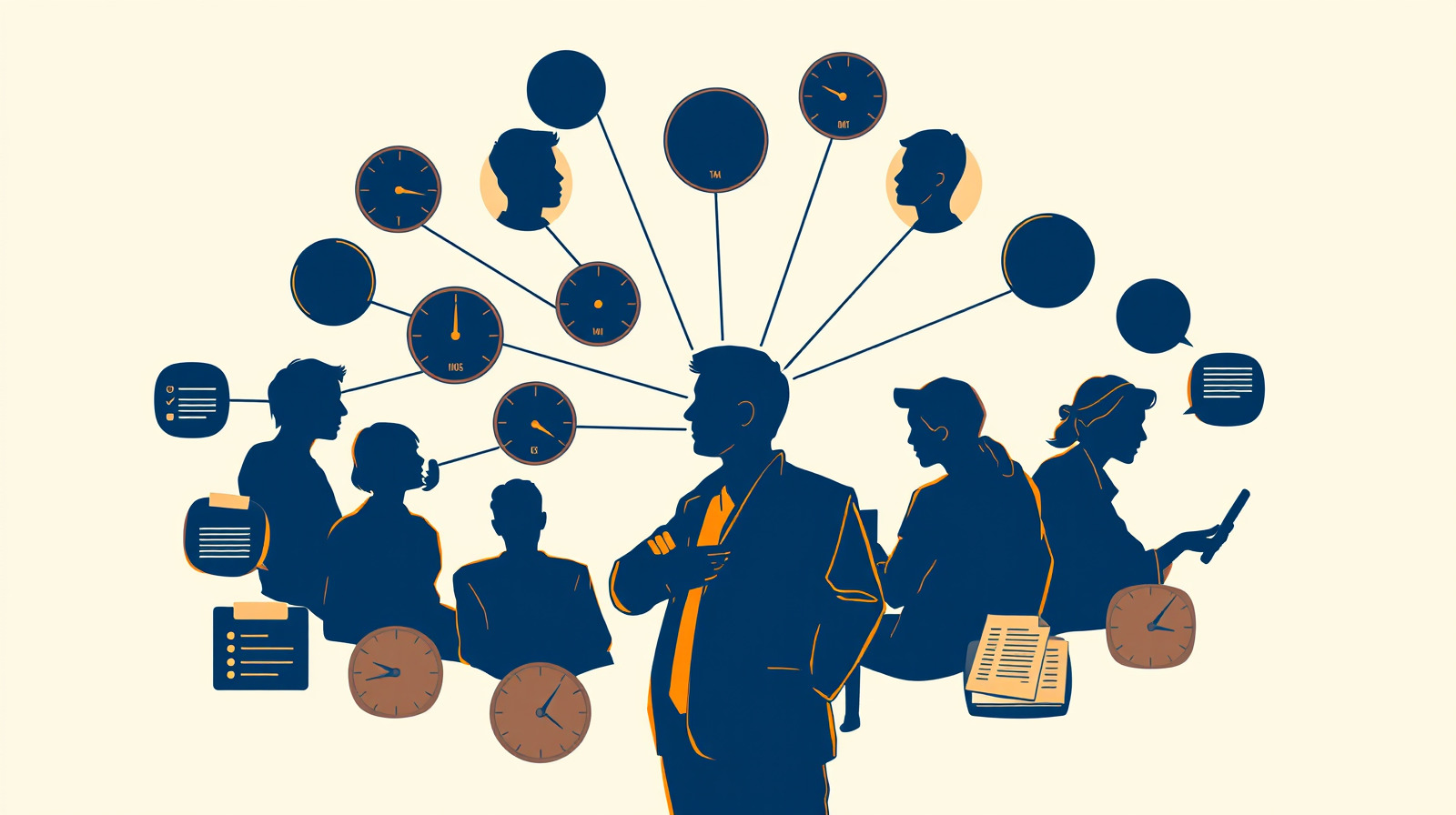
Every AI program has a stakeholder deck. Roles, interests, influence levels, communication plans. It’s usually a PowerPoint slide with a 2x2 matrix, produced at program inception and never updated again.
The deck doesn’t tell you what you need to know. What you need to know is who the informal blockers are, which executive will withdraw support when results are mixed, what the CMO told the CFO about AI in the corridor last week, and whether the sponsor who signed off at the start is still paying attention.
Stakeholder management for AI programs is different from stakeholder management for other kinds of programs because the stakes are higher, the uncertainty is more sustained, and the gap between what executives expect and what AI actually delivers in the early phases is systematically wide.
The stakeholder map you’re not building
The standard stakeholder map captures formal power: titles, reporting lines, decision authority. It misses informal power — the relationships and reputations that determine whether an organization actually moves.
The CFO who approved the budget but doesn’t attend reviews. The head of operations who has a long history of skepticism about technology programs and whose quiet opposition can drain energy from a program without ever appearing in meeting minutes. The board member who had a bad experience with an AI vendor three years ago and is looking for evidence the same thing is happening again.
These people don’t appear in the stakeholder matrix because their influence isn’t visible in an org chart. But they shape outcomes. Missing them is one of the most common and most expensive mistakes in AI program management.
The map that actually works starts not from the org chart but from the question: who can make this fail? For each person who could derail the program — through active opposition, budget cuts, organizational changes, or simply withdrawing attention — the question is what they need to see, hear, and experience to stay aligned.
The conversations that don’t go in the deck
A lot of the real work in stakeholder management happens outside formal review structures.
The sponsor who asks you in the hallway whether the team is actually making progress or whether the weekly updates are theater. The CFO’s chief of staff who is quietly assessing whether this program will be on the budget cut list. The senior engineer in the business unit who has been telling their colleagues the model won’t work, and who is now looking at every output for evidence they were right.
These conversations require a different kind of preparation than a status update. They require knowing what each person is actually worried about — not what they’re saying in meetings — and being able to address that concern directly without appearing defensive or over-reassuring.
The pattern I’ve found most useful: regular informal contact with the people who matter most to the program’s survival, calibrated to where they are in their thinking. Not updates — conversations. What are they hearing? What questions are they carrying from other conversations? What would change their view?
This sounds like politics. It is politics. Programs that pretend otherwise don’t last.
The mixed results problem
Early AI program performance is almost never as good as the initial business case implied. The data is messier than expected. The use case turns out to be harder than it looked in the POC. The business integration takes longer. The performance metrics are trending in the right direction but aren’t there yet.
This is normal. It’s also the period where programs are most at risk of losing stakeholder support.
Three communication failure modes are predictable in this period.
Over-promising is the most common. The program team, under pressure to demonstrate progress, frames results more positively than they are — emphasizing the metrics that are improving while not addressing the ones that aren’t. This buys time, but it creates a credibility deficit that’s hard to recover from when reality catches up with the framing.
Over-qualifying is the inverse error. Every update comes with so many caveats, so many technical explanations for why the results aren’t yet representative, that stakeholders stop believing anything the team says. Uncertainty is real in early AI programs, but there’s a difference between acknowledging it and using it as a shield.
Going silent is the most dangerous. The program team, sensing that results are below expectation, starts avoiding the conversations. Updates get more infrequent, meetings get canceled, access to the actual performance data becomes difficult. Stakeholders who are getting less information don’t assume things are fine. They assume the opposite.
The communication approach that actually works is also the hardest one: saying clearly what is and isn’t working, what the team has learned, what has changed about the approach as a result, and what the revised timeline looks like. Early in an AI program, honesty about setbacks doesn’t lose stakeholder confidence if it’s paired with credible adaptation. What loses confidence is the impression that the team doesn’t know what’s happening or isn’t telling you.
When something goes visibly wrong
At some point in most large AI programs, something goes wrong in a way that’s visible: a model produces outputs that embarrass the business, a performance metric collapses, a system that was supposed to be in production isn’t. How the program team handles that moment determines whether the program survives it.
The instinct is to minimize and explain. This is usually wrong. A stakeholder who learns about a failure from someone other than the program team, or who hears the team’s explanation and feels it’s incomplete, will not recover trust easily.
What works: telling the story before it’s told to you, owning the root cause rather than distributing blame, presenting the specific changes the team is making as a result, and establishing a timeline for when confidence should be re-evaluated. Not “we’re on track,” but “this is what happened, here’s what it means, here’s what we’re changing, here’s when you should assess whether the change is working.”
The six-month alignment problem
Stakeholder alignment established at program inception is not alignment that holds at month six. It’s a starting position.
Organizations change. Priorities shift. The executive who sponsored the program gets a new role. The business unit that was most engaged finds itself under budget pressure. The board committee that approved the investment wants to see different metrics than the ones the program was optimized for.
Programs that maintain alignment do so through continuous work, not a one-time alignment exercise. That means regular recalibration with key stakeholders — not just reporting to them — and willingness to adapt the program’s framing, pace, or scope when the external context changes.
The hardest version of this is when the program itself needs to change course — when the original use case isn’t working as planned and a pivot is necessary. Executing that pivot without losing stakeholder confidence requires having built the kind of trust where stakeholders believe the team is telling them the truth, including the uncomfortable parts.
That trust is built over months of consistent, honest communication. It’s not something you can manufacture when you need it. And the organizations that skip the groundwork — that assume formal sign-off equals ongoing support — are usually the ones scrambling at month nine to explain why the program needs more time, to stakeholders who have already stopped listening.