Showing Posts From
Ai policy
- 01 Jun, 2026
Shadow AI: What's Already Running in Your Organization
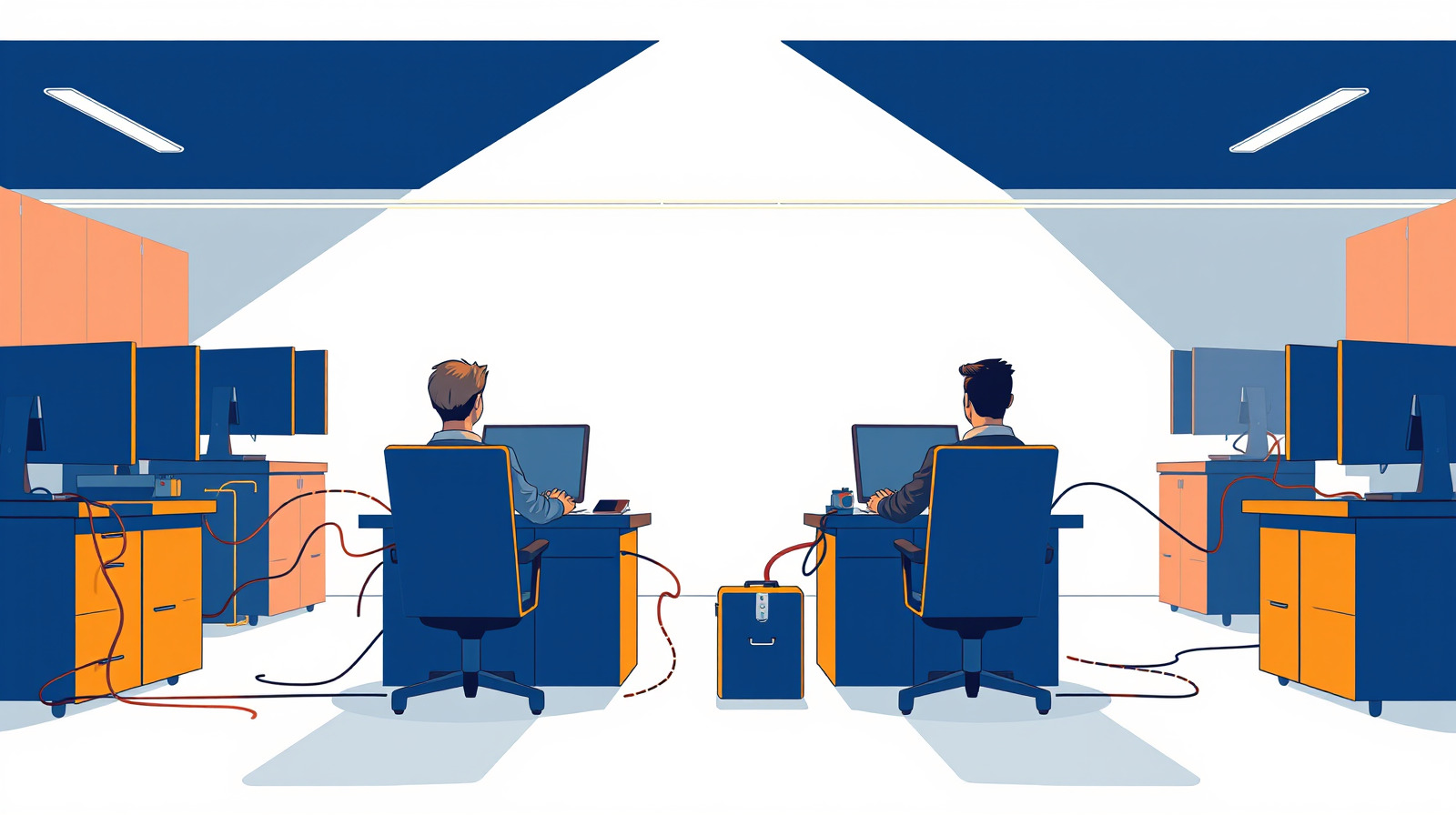
Before any formal AI program exists, before the steering committee has its first meeting, before the CIO has signed off on a single vendor — your employees are already using AI. Not because they are reckless. Because they have work to finish. I have walked into organizations that spent six months building an AI governance framework and discovered, halfway through the engagement, that the finance team had been using a consumer large language model to draft board reports for the past year. The legal team was using a different one to summarize contracts. Neither team thought they were doing anything wrong. They were getting work done faster. That is the shape of shadow AI. It does not announce itself. It does not appear in your IT asset register. It shows up in the gap between the work people need to do and the tools they have been given to do it. What shadow AI actually looks like The term sounds covert. It rarely is. Most shadow AI use is visible if you look for it — people pasting client briefs into ChatGPT, uploading PDFs to summarization tools, running AI writing assistants over strategy documents. Nobody is hiding anything. They just do not think of it as an IT procurement decision. The categories I see most often: Consumer AI assistants used for drafting, summarizing, researching, and explaining technical material. These are usually the first tools employees reach for because they already use them outside work. The friction is zero. AI features embedded in software people already have — writing assistants in productivity suites, AI tools inside project management and communication platforms. These arrive via a product update, not a procurement decision, and most organizations do not notice until they are already in use. Specialist tools for specific functions: AI contract review, AI coding assistants, AI research tools, AI presentation builders. These typically start as a free trial one person tries. Three months later the whole team is using them, usually without telling anyone. The common thread: easy to access, fast to start, and they solve a real problem. Nobody waits for procurement when they have a real problem. The data that leaves when they do Here is the question I put to leadership teams: what data has left your organization in the last 90 days through AI tools? Almost nobody has an answer. Every prompt sent to a third-party AI tool is data that has left the building. Every document uploaded for summarization. Every contract pasted in for analysis. Every email thread fed to an assistant for context. This is not theoretical exposure. It is live, ongoing, and unmeasured. The specific risk depends on the tool. Some consumer AI products train future models on user inputs by default unless the user has explicitly opted out — a setting most enterprise users have never opened. Some retain query data for extended periods for internal product improvement. Some have data residency terms that have no relationship to the organization's regulatory obligations. Most employees have read none of this. What makes shadow AI data exposure different from other shadow IT is the combination of volume and sensitivity. When someone uses an unsanctioned SaaS product, they tend to generate new data inside that system. When someone uses an unsanctioned AI tool, they are typically feeding existing sensitive material — client information, financial projections, internal strategy — into a system with unknown retention, processing, and training terms. A CTO told me once: "We spent a year tightening our cloud storage permissions, and the whole time people were copying strategy documents into a consumer AI chat." He was not exaggerating. He had run the discovery work. The decision quality problem The data risk is one issue. The decision quality risk is a separate one. When employees use AI tools that have not been evaluated or approved, the outputs they receive carry no governance. There is no audit trail of what the model was asked, what it returned, or how that output influenced a decision. Nobody has tested whether the tool performs reliably on the organization's specific data domain. Nobody has checked whether outputs are factually accurate, whether knowledge cutoffs create blind spots, or whether model behavior introduces biases relevant to the use case. I have seen board presentations drafted with consumer AI assistance that contained subtly incorrect market figures — the kind of error that is hard to catch if you are not already deeply familiar with the material. I have seen contract summaries that missed jurisdiction-specific clauses because the model lacked coverage of that legal context. None of these produced immediate disasters. But they were invisible errors that reached decision-makers before anyone thought to check the source. The problem is not that the tools are necessarily unreliable. The problem is that nobody defined what "reliable enough" looks like for this use case, nobody validated that the tool clears that bar, and nobody has visibility into which decisions have been shaped by which tools. Why a policy does not solve this on its own Every organization that discovers shadow AI responds the same way: they draft a policy. Employees must not use AI tools without prior approval. All AI tools must go through procurement. No sensitive data should be uploaded to external AI systems. These policies are not wrong. They are just insufficient on their own. A policy without detection capability is a statement of intent, not a control. If you cannot observe what tools are in use, you cannot enforce anything. And the detection problem is real — consumer AI tools operate over standard encrypted web traffic that looks indistinguishable from any other browser activity on most network monitoring setups. A policy without a usable alternative is a speed bump, not a barrier. If employees are turning to shadow AI because the approved tooling is slow, limited, expensive, or simply does not exist yet, a policy telling them to stop will reduce usage briefly and then have no effect. People optimize for their work. A policy without a clear explanation of why tends to generate resentment rather than behavior change. If employees do not understand what the actual risk is — not just that "data security is important" but specifically what could happen to the specific data they are handling — they will weigh an abstract policy against a concrete productivity benefit and find the policy unconvincing. What actually works There are four interventions that change the situation. Not instead of policy — alongside it. Run a discovery exercise before making any decisions. You need to know what is actually in use before designing controls. This means endpoint monitoring, network traffic analysis, and honest conversations with department heads. Expect surprises. The goal is not to catch anyone — it is to understand your real exposure before you design a response to it. Move quickly on a sanctioned alternative. The fastest way to reduce shadow AI use is to provide a better approved option. This does not require the best enterprise AI platform with a six-month procurement timeline. It means the minimum viable approved tool that addresses the main use cases driving shadow adoption — often that is simply a properly configured, privacy-compliant version of the same tool people are already using. Create a fast path for new tool requests. The reason shadow AI persists is that the formal route takes too long. Teams wait months for IT to evaluate a tool they need now. Make the process faster and more transparent. Most requests should get a decision within two weeks. The ones that cannot should at least get a clear explanation of why not. Treat the people using shadow AI as a signal. They are telling you where your official tooling is falling short. Employees using unauthorized AI tools are often the highest performers trying to work better. Treating them as a compliance problem to be managed misreads what is happening. Their behavior is product feedback. What to take from thisAudit shadow AI use before designing governance for it. You need to know what is already running before you build controls around it. Consumer AI data terms are not written for enterprise compliance. Read them — specifically the sections on input retention, training use, and data residency — before employees continue uploading sensitive material. A policy without detection is not a control. Invest in observability first, then communicate the policy. The fastest fix is a sanctioned alternative that works. Prohibition without substitution creates resentment, not compliance. The employees using shadow AI are showing you where your approved tooling has gaps. Use that information when planning what to procure next.The organizations I see handle this well are not the ones that moved fastest to write a policy. They are the ones that ran the discovery work, understood their actual exposure, and moved quickly to close the gap between what employees needed and what they were officially allowed to use. That gap is where shadow AI lives.
Read full article