Showing Posts From
Ai strategy
- 11 Jun, 2026
The AI Talent Gap That Will Determine Whether Your Strategy Delivers
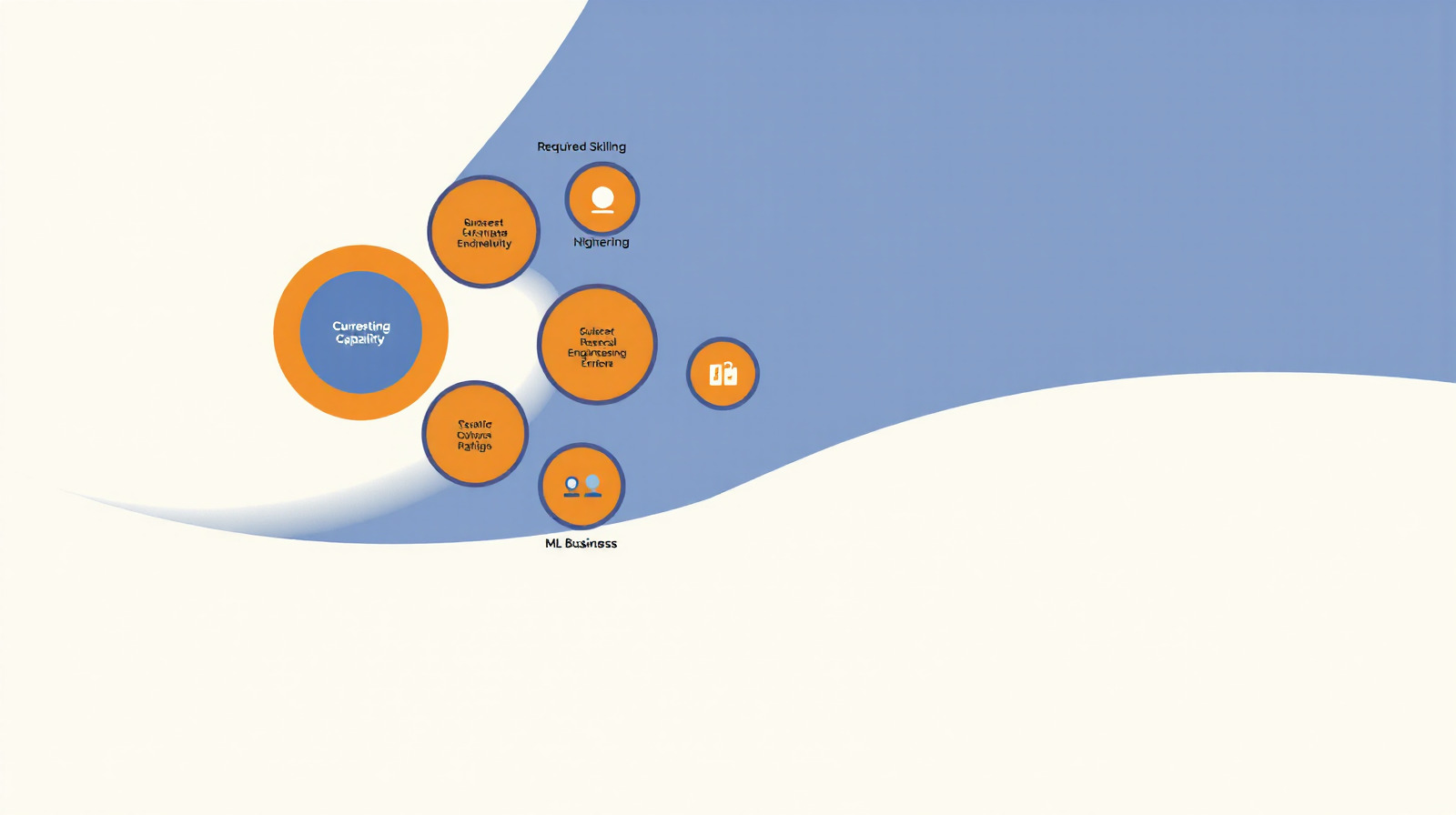
The most common response to an AI talent gap is a senior hire. A Chief AI Officer, a VP of AI, a Head of Machine Learning — someone with the credentials to lead the function and signal organizational commitment. The hire is often necessary. It is not sufficient. The limitation is not the seniority of the hire. It is the assumption that AI capability is a function of a few experts at the top of a structure, when in practice AI delivery requires distributed capability across data engineering, software engineering, product management, and business functions. An excellent senior AI leader working with teams that lack data engineering depth, or with product managers who cannot translate business requirements into AI-ready specifications, will not solve the talent problem. What follows is a more granular account of where the talent gaps actually sit and what decisions the CTO and CHRO need to make to address them. The data engineering gap Of all the talent gaps in enterprise AI programs, the data engineering gap is the most consistently underestimated and the most consequential for delivery. AI models need clean, accessible, well-structured data. Producing that data at the quality and scale AI requires is data engineering work. It involves building and maintaining pipelines, managing schema consistency, handling data quality monitoring, implementing the access control infrastructure that AI systems need, and enabling the data freshness requirements that production AI applications demand. Most enterprise data engineering teams were built for business intelligence and analytics workflows: batch processing, monthly reports, data warehouse queries. These are different from what AI requires. AI applications often need lower latency, higher reliability, more granular access control, and better lineage documentation than analytics workflows do. The CTO who wants to deliver AI at scale needs a data engineering function capable of supporting it. That often means hiring, upskilling, and in some cases restructuring what the data function does — not just adding ML engineers to an existing team. The ML engineering versus data science distinction Organizations that are building their first production AI applications sometimes conflate data science — the role of developing models and validating their performance — with ML engineering, the role of deploying those models into production systems reliably and at scale. Both are necessary. They are not the same skill profile, and the market for each is different. Data scientists are relatively abundant at the senior level, because most organizations that have been investing in analytics have developed or hired them. ML engineers — people who can build model serving infrastructure, implement monitoring for production model performance, manage model versioning and rollback, and integrate AI components into existing software systems — are significantly scarcer. The consequence: organizations that have data science capability but limited ML engineering capability can develop models in research environments that never make it to production, or that make it to production but degrade gracefully without anyone noticing because the monitoring infrastructure does not exist. If the AI program's goal is production systems rather than research artifacts, the CTO needs to assess the ML engineering capacity specifically, not just the overall AI headcount. The product management capability gap AI products require a different kind of product management than traditional software products. The core difference: the behavior of an AI system is probabilistic, not deterministic. It does not do the same thing every time with the same inputs. It produces outputs that vary, that can be wrong in ways that are hard to predict, and that require different quality evaluation approaches than traditional software. Product managers who are excellent at defining functional requirements for traditional software often struggle with AI products because the tools for specifying and evaluating probabilistic behavior are different. Writing specifications for what an AI system should do, designing evaluation frameworks for outputs that are not right or wrong but better or worse, and building product intuition for what good AI performance looks like in a given context are skills that most PMs have not developed. The CHRO and CTO need to assess whether the organization's product management function has the capability to manage AI products effectively, and build a development plan for those who do not. This is a training and coaching question as much as a hiring question — the capability gap can often be closed more quickly through targeted development of existing PMs than through hiring. Business function AI capability The talent discussion in AI programs is usually focused on the AI team. The talent that is often more limiting in practice is the capability in the business functions that the AI program is serving. A demand forecasting AI system that produces excellent outputs is only valuable if the operations function can use those outputs to make better planning decisions. An AI-assisted underwriting tool only improves outcomes if underwriters can evaluate AI recommendations critically. An AI customer segmentation system only drives revenue if the marketing function knows how to act on the segments it produces. The capability gap in business functions shows up as underutilization: the AI system is deployed, adoption is technically measurable, but the organization is not capturing the value because the business users do not have the skills or the process changes required to convert AI outputs into better decisions. This is a CHRO problem more than a CTO problem. The CHRO needs to assess capability requirements in the business functions where AI is being deployed, build development programs that address specific skill gaps, and — where necessary — reassess role profiles to reflect the new capability expectations. The retention problem Building AI capability is hard. Retaining it is harder. The market for AI talent is competitive in ways that most enterprise organizations are not structured to compete with. The retention challenge is not purely about compensation, though that is a factor. It is about the work itself. AI engineers and data scientists who join an enterprise to build production AI systems stay when the work is technically interesting, when there is access to good data, when the organization moves fast enough to keep them engaged, and when there is a credible path to increasing impact. Enterprise AI programs that are slow to deploy, that are constrained by data access issues, or that cannot move past proof-of-concept into production create retention problems independent of compensation. The best AI talent leaves not because they were offered more money elsewhere, but because the organizational conditions did not support the work they wanted to do. The CTO's response to the retention problem is not primarily about retention packages — it is about building the organizational conditions that make the work worth staying for. That means clearing data access blockers, moving programs through proof-of-concept to production on a credible timeline, and giving AI teams genuine ownership over delivery. What to take from thisThe data engineering capability gap is more consequential for AI delivery than the data science or ML gap in most enterprises. Assess it specifically and address it before the program depends on it. ML engineering and data science are different roles with different skill profiles and different market availability. Both are required for production AI systems. Product management capability for probabilistic systems needs to be developed explicitly. Most PMs do not have it and it does not develop naturally through exposure alone. Business function capability to use AI outputs is a limiting factor that the CHRO needs to address. AI underutilization is usually a business function capability problem, not an AI system problem. Retention of AI talent depends more on organizational conditions than compensation. The CTO's retention strategy is about clearing blockers and maintaining momentum, not primarily about pay.
Read full article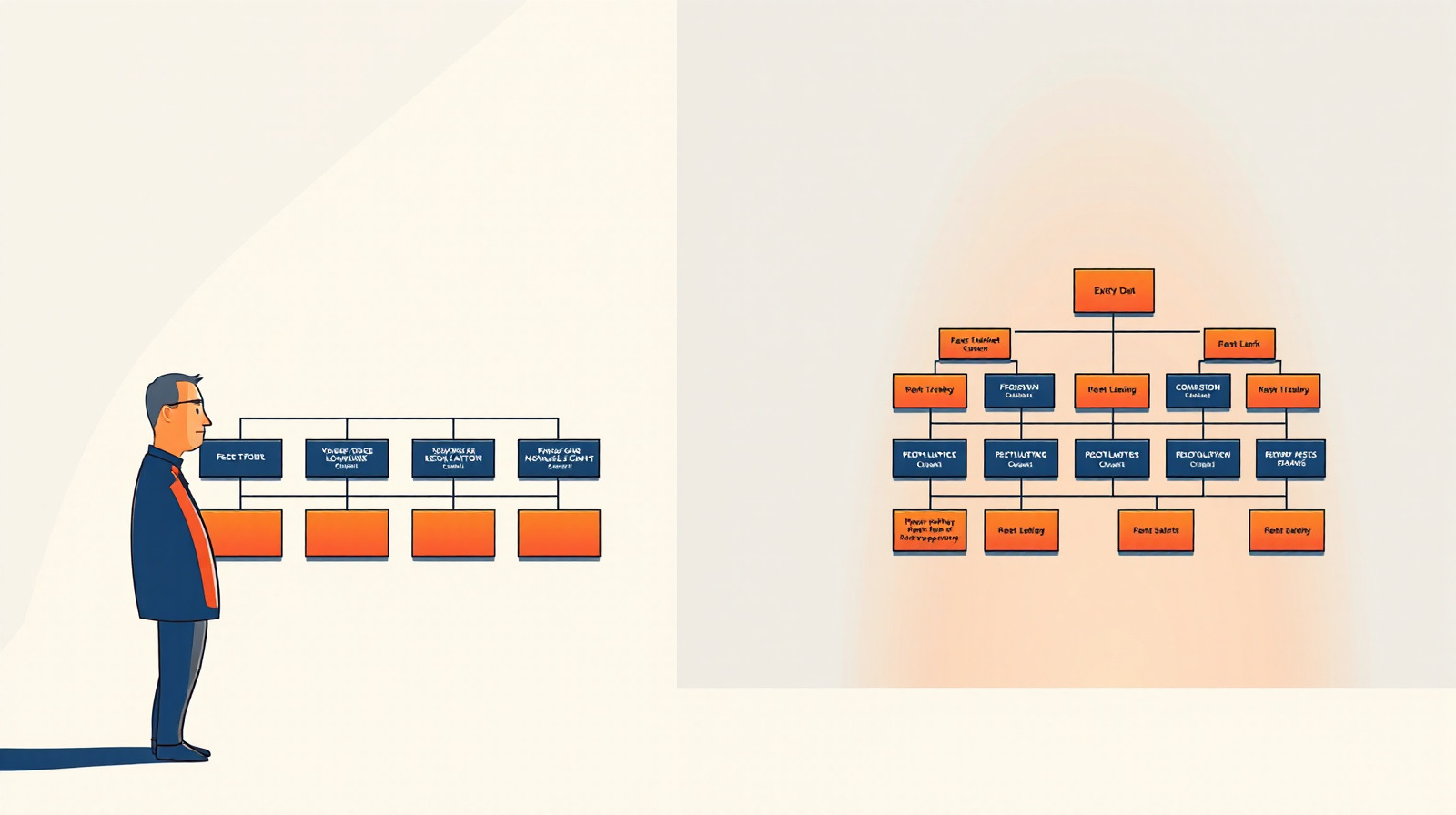
- 10 Jun, 2026
The Organizational Change Nobody Plans for When AI Goes Into Production
Technical AI programs plan for model performance, infrastructure reliability, and user adoption. The change management plans in most AI programs cover communication, training, and rollout support. These are necessary. They are not sufficient. What does not make it into the program plan is the organizational change that AI deployment actually creates: changes in who makes decisions, where accountability sits, and how existing roles need to adapt. These changes are not side effects of the technical program — they are the substance of what AI deployment means for how the organization operates. And they tend to surface six to twelve months after go-live, in the form of confusion about accountability, conflict between roles that now overlap, and resistance from functions that feel their judgment has been displaced. Addressing these changes proactively requires treating AI deployment as an organizational design question, not just a technology one. The decision rights problem AI systems are good at making or informing decisions that humans previously made alone. When an AI system produces a recommendation — in credit assessment, in demand forecasting, in HR screening, in customer prioritization — the human who used to make that decision now has a different role. They are either ratifying the AI's recommendation, overriding it, or working alongside it in a way that requires a new kind of judgment. This changes the nature of the role without changing the job title or the org chart. The credit analyst who used to run the full assessment is now running exception management. The demand planner who used to construct forecasts is now reviewing and adjusting AI-generated ones. The recruiter who used to screen applications is now reviewing a pre-filtered shortlist. These are not simpler jobs. In some respects they are harder — they require a different kind of expertise, specifically the ability to evaluate AI outputs critically rather than produce analysis independently. The people in these roles may have been selected and developed for the original capability profile, not the new one. Organizations that do not address this explicitly produce two failure modes. People who struggle with the new role either resist the AI system — finding reasons not to use it, overriding it more than the data warrants — or over-defer to it, approving AI recommendations without the critical review that the accountability structure requires. The accountability gap When a decision goes wrong in a human-only process, the accountability is reasonably clear. When a decision informed by an AI recommendation goes wrong, the accountability is murkier, and organizations that have not thought about it in advance tend to discover this in a difficult situation. Was the decision wrong because the AI recommendation was wrong? Or because the human failed to apply appropriate judgment to a valid AI recommendation? Or because the system was deployed in a context it was not designed for? Or because the training data did not reflect the conditions that produced this specific case? None of these questions have clean answers in an organization that has not set up the accountability structure deliberately. The result is attribution conflict: the AI team points to the human decision-maker, the business function points to the AI system, and nobody has clear accountability for remediation. Defining accountability for AI-informed decisions before deployment is one of the most important organizational design questions in any AI program. It requires a clear statement of where human judgment is required, what escalation looks like when the AI recommendation is overridden, and what the process is for determining whether a decision-quality problem is an AI problem or a human judgment problem. The capability shift The capability an AI system replaces does not simply disappear from the organization's needs — it transforms. The expertise required to interpret and challenge AI outputs is often closely related to the expertise required to produce the underlying analysis manually. But they are not the same skill, and the transition period between the two is where the most significant organizational risk sits. In the immediate period after AI deployment, the organization typically has people who are capable of doing the work manually but are still learning to use the AI tool effectively. This is manageable. The medium-term risk is more significant: if the organization stops developing the underlying manual capability because AI handles it, and the AI system underperforms or becomes unavailable, the recovery is slower than anyone anticipated. This is not an argument against AI deployment. It is an argument for being deliberate about which capabilities the organization maintains independently of the AI system and which it allows to atrophy as AI performance becomes reliable. The role boundary conflicts When AI tools augment work across function boundaries — a customer-facing AI system that pulls from data owned by multiple departments, an AI planning tool used by both finance and operations — the organizational boundaries that existed for human work do not automatically translate. Who decides what data the AI system uses? Who is accountable if the AI produces an output that reflects poorly on a specific function? Who decides when the AI recommendation should be overridden? When the AI generates recommendations that one function disagrees with, what is the escalation path? These are organizational design questions dressed as AI governance questions. They arise because AI systems do not respect the lines between functions in the same way that human roles do. The AI pulls on data from wherever it can reach and produces outputs that may reflect or implicate multiple functions simultaneously. The organizations that handle this well have addressed it before go-live: clear data ownership, a governance structure for the AI system that is recognized by all the functions it touches, and escalation paths that do not depend on functional boundaries that the AI system has already made ambiguous. The human-in-the-loop question Most AI programs that include human review in their design treat it as a quality control mechanism: the human checks the AI output before it is acted on. This framing is correct but incomplete. The human in the loop is also, and more importantly, the locus of accountability for the decision. If the human review is a checkbox rather than a substantive check, the accountability protection is illusory — the organization has the appearance of human oversight without the substance. Regulators, clients, and courts are unlikely to accept "a human reviewed it" as a sufficient defense for a poor decision if the review process was not meaningful. What meaningful human oversight looks like — how long it should take, what the reviewer is expected to assess, what training they need, what recourse they have when they disagree with the AI — needs to be specified in the organizational design of the AI system, not left to individual judgment. What to take from thisMap how AI deployment changes existing decision rights before go-live. The people whose roles are affected need to understand the new expectation before the system is live, not after they have defaulted to the wrong behavior. Define accountability for AI-informed decisions explicitly. The accountability structure needs to specify where human judgment is required, what override looks like, and how decision-quality problems are attributed and remediated. Assess the capability implications of AI deployment over a three-to-five year horizon. Identify which capabilities the organization intends to maintain independently and which it is comfortable allowing AI to own. Address function boundary conflicts before deployment. The organizational design questions created by AI systems that cross functional lines need governance structures that all the affected functions recognize. Human-in-the-loop design needs to specify what meaningful review looks like, not just that review occurs. Checkbox oversight creates accountability risk, not accountability protection.
Read full article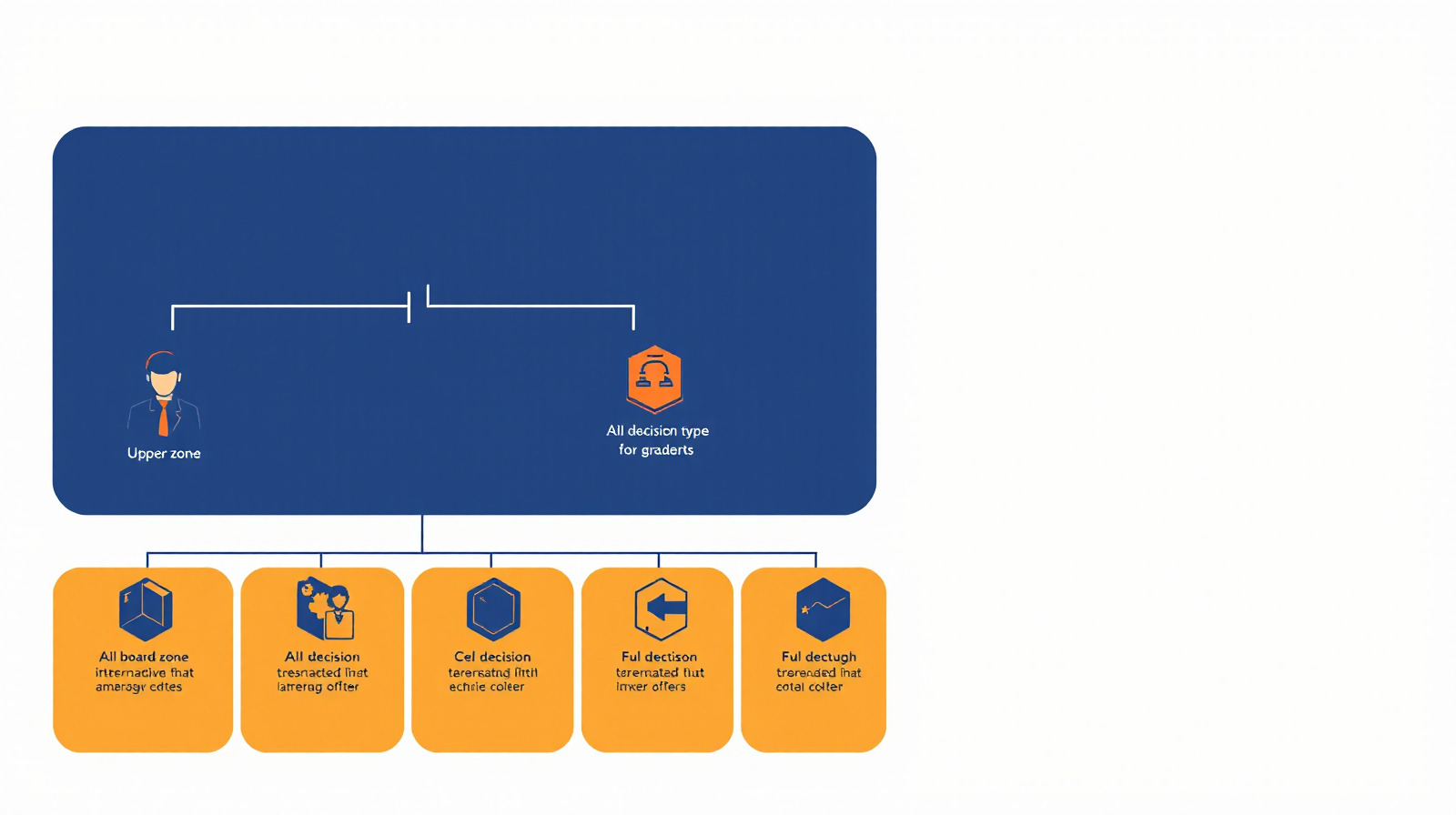
- 30 May, 2026
The AI Decisions That Belong in the Boardroom and the Ones That Don't
Boards are receiving more briefings on AI than at any point in the past decade. The briefings tend to follow a pattern: a review of what the organization is doing with AI, some benchmarking against peers, a progress update on the AI program, and a discussion of risk at a level of abstraction that rarely produces board-level decisions. This pattern is not wrong exactly. It keeps the board informed. The problem is that being informed and making decisions are different activities, and the distinction matters for governance. There are AI decisions that genuinely belong at the board level — not because AI is new and important, but because the specific stakes of those decisions fall squarely within board governance responsibilities. There are also AI decisions that the board should leave to management, even if management regularly seeks board cover for them. Getting the line right is one of the more practical AI governance questions a board and its executive team can work out together. What belongs in the boardroom Accountability and liability policy for AI decisions. When an AI system makes or informs a decision that causes harm — a financial recommendation that loses client money, a hiring system that demonstrates discriminatory patterns, a customer-facing system that produces harmful outputs — who is accountable, and how does the organization respond? This is a board-level question because it involves the organization's legal exposure, its reputational position, and its relationship with regulators and stakeholders. The board cannot delegate accountability for how the organization handles harm caused by its AI systems. It can and should set the accountability policy, review it periodically, and ensure management has implemented it. Material workforce impact. AI adoption at scale will change employment profiles, skill requirements, and in some cases headcount within the organization. Decisions about significant workforce restructuring that follows from AI adoption — including what support is provided to affected employees, how the change is communicated, and what the timeline looks like — are governance decisions that belong at board level. This is not about micromanaging the AI program. It is about the board fulfilling its oversight responsibility for how the organization treats its people during a significant transition. Strategic AI dependency concentration. If the organization's competitive capability becomes materially dependent on a small number of AI vendors, that concentration represents a strategic risk that the board should explicitly approve and monitor. The decision to build deep integration with a single AI platform, with the switching costs and dependency that creates, is a strategic decision with governance implications — not just a technology procurement decision. Regulatory compliance posture on AI. In jurisdictions where AI regulation is active — the EU AI Act being the current reference point — the board needs to understand the organization's compliance posture and approve the approach to managing regulatory obligations. This is not different in kind from board oversight of GDPR, financial regulation, or environmental compliance. AI regulation is a board governance matter. Tolerance for AI risk categories. The board should set explicit tolerance levels for the risk categories that AI creates: acceptable error rates in AI-driven decisions, acceptable data exposure scope, acceptable concentration in AI vendor relationships. These are risk appetite decisions that management cannot make alone, because they define the boundaries within which the AI program operates. What management should own Technology selection and architecture. Which AI models, which vendors, which technical architecture — these are management decisions. The board's accountability framework and risk tolerance set the constraints; management chooses the specific solutions that operate within them. Boards that get drawn into technology evaluation are typically filling a gap in management capability rather than exercising appropriate governance. Use case prioritization and sequencing. Which AI applications to build, in what order, with what resources — this is program management and product strategy. The board's contribution is ensuring the strategic logic is coherent and the business case is credible. The specific prioritization decisions are management's. Day-to-day AI governance. The operational governance of AI systems — use case review, data classification, vendor assessments, incident response — is management responsibility. Boards that are asked to approve individual use cases, or to review individual vendor agreements, are being used as a governance substitute for absent management infrastructure. Performance management of AI programs. The program is on time or late, on budget or over, delivering expected value or not. These are operational and performance management questions. The board reviews progress at an appropriate cadence; it does not manage the program. The failure modes to avoid Boards approving AI investments without understanding accountability. An AI investment proposal that does not include a clear accountability framework for how the organization handles AI-caused harm should not receive board approval. Approving the investment without this is approving the upside without governing the downside. Management using the board as governance cover. Boards that are asked to approve individual AI decisions that should be management decisions are not being well-served. This pattern often develops when management is uncertain about a decision and wants board endorsement as protection. The appropriate response is to develop management governance infrastructure, not to escalate decisions to a body that does not have the operational context to make them well. Risk briefings that do not produce decisions. A board that is regularly briefed on AI risk without being asked to make any decisions based on that risk information is not exercising governance — it is accumulating information. Risk briefings should be connected to decisions: what is the board approving, what are they directing management to change, what are they asking to see next time? Disconnected AI governance from existing board responsibilities. AI governance is not a new category separate from existing board responsibilities. AI decisions about liability and accountability connect to the board's existing responsibility for legal and regulatory governance. AI decisions about workforce impact connect to existing responsibility for human capital oversight. Boards that treat AI governance as a standalone topic miss the connections to existing governance frameworks that make oversight coherent. A practical approach for boards and executive teams The most productive conversation between a board and an executive team on AI governance is not "what should we know about AI" — it is "what decisions do we need to make, and who is the right decision-maker?" That conversation produces a clearer role for the board: not to be informed about AI in general, but to take specific ownership of specific decision categories. And it produces a clearer accountability for management: not to keep the board informed, but to make the operational decisions that the board has given them responsibility for. Done well, this conversation also makes board AI briefings more useful. The briefing is no longer a general update — it is a status report against specific governance responsibilities, with clear points for board input and decision. What to take from thisThe board's AI governance responsibilities connect to existing governance categories: accountability and liability, workforce impact, strategic concentration risk, regulatory compliance, and risk tolerance. Frame AI governance through those existing responsibilities, not as a standalone category. Technology selection, use case prioritization, and operational AI governance are management decisions. Boards that get drawn into these decisions are usually compensating for absent management governance infrastructure. AI investment proposals should include an accountability framework as a condition of approval. An investment without accountability for the downside is an incomplete case. Board risk briefings on AI should produce decisions, not just information transfer. Connect each briefing to what the board is approving, directing, or asking to see next. The most productive governance conversation is: what decisions belong at board level, and what has to be owned by management? Work this out explicitly before the program is in delivery, not after a governance question surfaces without a clear owner.
Read full article
- 26 May, 2026
How to Evaluate Whether Your Organization Is Ready to Run an AI Program
AI maturity assessments have proliferated to the point where most of them are marketing instruments for the organization running them. They produce a score that tells you where you sit on a capability spectrum, recommend a set of investments to move up the scale, and conveniently describe the services that will help you do so. What they rarely do is give an executive team an honest answer to the actual question: can we run an AI program that delivers the outcomes in the business case, given who we are, what we have, and how we work? This is a harder question to answer honestly, because a genuine assessment surfaces blockers that create organizational discomfort. Data that is less ready than assumed. Governance structures that are not in place. Leadership alignment that looks coherent in a steering committee but breaks down when the program encounters real tradeoffs. The incentive to produce a reassuring answer — particularly when the assessment is conducted by a party with a commercial interest in subsequent program work — is strong. Here is what an honest readiness assessment actually looks like. Data readiness This is the most frequently overestimated dimension and the one with the most direct bearing on program success. The question is not whether the organization has data — most organizations have abundant data. The question is whether the specific data the proposed AI system requires is available, accessible, of sufficient quality, and governable. Available means the data exists and can be located. In many enterprises, data that is theoretically available in principle is practically unavailable because it is spread across systems, locked in legacy infrastructure, or in formats that require significant transformation. An AI program should know, before it starts, exactly where its required data is and how accessible it actually is. Of sufficient quality means the data is accurate, complete, and consistent enough for the AI use case in question. Data quality requirements vary by application: a model for approximate demand forecasting can tolerate more inconsistency than a model for automated regulatory submissions. The readiness assessment should specify what quality threshold is required and measure the current data against it, not assume adequacy. Governable means the organization has the access control, classification, and data management infrastructure to use the data in an AI context in a way that is compliant with its regulatory and contractual obligations. This often turns out to be the binding constraint, not the data quality. Leadership alignment Leadership alignment is the dimension most likely to be assessed too optimistically. It is easy to achieve apparent alignment in a steering committee where everyone has agreed that AI is a priority and the business case looks compelling. Real alignment is revealed under tradeoff conditions — when the program requires resourcing decisions that compete with other priorities, when the delivery timeline needs adjustment, when the use case delivers value for one function at cost to another, or when the program surfaces organizational problems that are uncomfortable to address. The questions that reveal genuine alignment: Who has committed resourcing that is currently deployed elsewhere if the program requires it? What happens if the program timeline extends by six months — is there an organizational response ready, or does the program get quietly deprioritized? If the AI system changes a business process in a way that creates tension between two executive sponsors, who adjudicates? An organization where these questions produce clear, confident answers has the leadership alignment for an AI program. An organization where these questions produce hedged, uncertain, or "we'll cross that bridge when we come to it" responses does not — yet. Technical infrastructure The technical readiness question is usually the easiest to assess, because it is the most concrete. The relevant dimensions: Does the organization have the cloud infrastructure to deploy and operate AI systems at the required scale and latency? For most enterprises, the answer is yes — cloud infrastructure is well established. The detail matters: is the infrastructure configured appropriately, is the security architecture compatible with AI system requirements, and are the monitoring and observability tools in place? Are the data pipelines that feed the AI system production-grade? Pipelines built for monthly analytics reporting are not the same as pipelines built for a real-time AI application. The pipeline reliability and freshness requirements of the AI system should be assessed against what currently exists. Is the integration layer that connects the AI system to existing workflows and systems designed and resourced? Integration work consistently takes longer than planned. Know the scope before the program starts. Governance and operating model An AI program without governance infrastructure in place will build it under delivery pressure, which produces governance that is incomplete, inconsistently applied, and harder to retrofit than it would have been to build upfront. The governance elements that need to be in place before the program starts: a clear owner for AI governance decisions, a defined process for use case approval, an escalation path for issues that arise during delivery, and a set of principles that govern what the program will and will not do. These do not need to be comprehensive frameworks — they need to be clear enough that the delivery team can make decisions without escalating everything. The operating model question is about who will own and operate the AI system after it goes live. An AI program that delivers a system and then hands it off to a business team that has not been prepared to operate it will see performance degrade within months. The post-delivery operating model needs to be defined as part of the program, not as a follow-on task. Talent and capability Capability readiness has three layers: the delivery team, the support and operations function, and the business function that will use the AI system. Delivery team readiness is typically assessed — organizations know whether they have the engineering and data science capability to build what they are planning to build. What is less often assessed is whether the team has experience with the specific architecture and integration pattern the program requires. Building a retrieval-augmented generation system is different from building a traditional predictive model, and the difference is not trivial. Support and operations readiness is frequently overlooked entirely. Who will support the AI system in production? What does first-line support look like, what escalation paths exist, and does the operations function have the skills to diagnose AI-specific issues? Business function readiness is the most common gap. The users who will interact with the AI system — and whose changed behavior is often the mechanism through which the business case is realized — need preparation that most program plans underestimate. This is not just training; it is process change, incentive alignment, and sustained adoption support. What the honest answer means The output of an honest readiness assessment is not a go or no-go decision. It is a sequenced plan. Some gaps are program-blocking: data that is unavailable, leadership alignment that does not exist, infrastructure that cannot support the required performance. These need to be addressed before the program starts, not alongside it. Other gaps are manageable within the program: data quality that can be improved in parallel with early program phases, talent gaps that can be addressed through targeted hiring or reskilling, governance that can be built as part of delivery. The honest answer from a readiness assessment tells the program sponsor what needs to happen before the program starts, what can happen in parallel with the program, and what the realistic timeline is given the current state. That is the answer that produces programs that deliver — not the reassuring score that produces programs that struggle. What to take from thisAssess data readiness against the specific requirements of the proposed AI system, not against a general question of whether the organization has data. Availability, quality, and governability are the three variables that matter. Test leadership alignment under tradeoff conditions, not under consensus conditions. The real alignment is revealed when the program encounters a difficult decision, not when everyone agrees the program is a priority. Governance and operating model need to be in place before delivery starts. Building them under delivery pressure produces worse governance than building them upfront. Business function readiness is the most commonly underestimated gap. The users of the AI system need more preparation than training alone. The output of a readiness assessment is a sequenced plan, not a score. Blockers get addressed first. Manageable gaps get addressed during delivery. The timeline reflects the actual state.
Read full article
- 21 May, 2026
How to Set Realistic AI Delivery Timelines When the Board Expects 90 Days
The gap between what boards expect from AI programs and what those programs can actually deliver in a given timeframe is one of the most consistent management problems I encounter. It is not a communication failure exactly. It is a structural feature of how AI investment decisions get made. A board approves AI investment based on presentations that show capability: what the technology can do, what other organizations have achieved, what the business case looks like over a three-year horizon. The approval is often accompanied by an expectation of visible results within a quarter or two — a reasonable expectation given that the presentation showed impressive capability, and unreasonable given what it actually takes to deploy that capability in a specific organizational context. The job of the program sponsor — usually a CTO, a CDO, or a COO — is to close that gap without losing the organizational momentum the board's enthusiasm creates. This requires a specific kind of honesty that is harder to deliver than it sounds. Why 90-day AI delivery is usually the wrong framing Ninety days is enough time to demonstrate AI capability in a controlled proof-of-concept. It is not enough time to deliver an AI system that is running in production, integrated with existing workflows, validated for the organization's specific data, and supported by the change management that makes adoption stick. The difference matters because boards typically want the latter and are shown the former. A proof-of-concept demonstrates that the technology works as advertised and that the use case is viable. It does not demonstrate that the organization can operate the system at scale, that the data quality is sufficient for production use, or that the business process changes required for adoption have taken hold. When a program delivers a proof-of-concept at 90 days and presents it as AI delivery, the gap between expectation and reality tends to surface three to six months later. The proof-of-concept did not scale. The production system encountered data quality issues. Adoption is lower than expected. The program has entered a second phase that was not in the original plan, against a backdrop of board impatience that is harder to manage because expectations were already set too high. The better framing: what can be delivered and operated in production at 90 days, what can be delivered at 6 months, and what is the full program trajectory? Most boards, presented with this honestly, will accept it. The resistance usually comes not from boards demanding the impossible but from sponsors who have not had the conversation clearly. How timelines actually break down The components that make AI delivery take longer than boards anticipate are predictable. Understanding them makes it easier to plan and explain. Data preparation. The most consistent source of delivery delay. Data that looks usable on a brief assessment turns out to require cleaning, labeling, transformation, or pipeline work before an AI system can use it effectively. This is not a failure of planning — it is a feature of enterprise data environments. Build it into the timeline as a defined workstream, not as an asterisk. Model validation. Validating that an AI model performs acceptably on the organization's specific data, in the organization's specific context, takes longer than validating it against vendor benchmarks. Edge cases appear. The performance envelope is narrower than the benchmark suggested. Iteration takes time. Three to six weeks is typical; six to twelve is not unusual. Integration. Connecting an AI system to production infrastructure — identity management, existing software systems, data pipelines, monitoring and alerting — is software engineering work that takes time regardless of how capable the AI model is. AI programs that underestimate integration effort routinely miss timelines. Change management and adoption. Process changes and user adoption do not happen automatically after a system goes live. Training, workflow adjustment, performance management changes, and sustained change management support are all required. The timeline for meaningful adoption is typically measured in months, not weeks. Governance and compliance. For AI systems that affect regulated processes, customer interactions, or personal data, governance review and compliance sign-off are sequential steps, not parallel work. Build them into the critical path. How to have the timeline conversation with the board The conversation is easier than it feels, because the content is not primarily about managing expectations down — it is about setting expectations clearly. The structure that works: present the full delivery plan at three stages. What can be demonstrated in proof-of-concept at 90 days. What will be in production at six months. What the full program delivers by 12 months. Connect each stage to specific business outcomes that the board can assess against the investment. The proof-of-concept stage is not meaningless — it validates technical feasibility, surfaces data issues, and creates organizational confidence. Frame it as what it is: a necessary step in the program, not the program's deliverable. At each stage, be specific about what "delivered" means. A production system with 200 users in one department has a different value proposition than a proof-of-concept with 10 users in controlled conditions. Make the distinction visible, not implicit. If the 90-day board expectation is already in place, the conversation is harder but still necessary. The choice is between a hard conversation now — explaining that the timeline needs adjustment and why — and a harder conversation later, when the program has failed to deliver what was implicitly promised. The earlier conversation is always less expensive. The pilot-to-production gap The specific transition that fails most often is the move from a successful pilot to production deployment. A pilot can look excellent in controlled conditions and then struggle significantly in production for reasons that are predictable in retrospect. Pilot conditions tend to involve enthusiastic early adopters, clean data for the test cases, simplified integration with existing systems, and high-touch support from the delivery team. Production conditions involve the full user population, real data complexity, full integration requirements, and standard support levels. The gap between pilot and production performance is not a project management failure. It is an inherent feature of the transition that requires explicit planning. Build a production readiness assessment into the program that specifically asks: what will be different in production from what was true in the pilot, and what does the program need to do to address those differences? What to take from thisNinety-day AI delivery usually produces a proof-of-concept, not a production system. Be explicit about the distinction when setting board expectations. Present the full program trajectory in three stages — proof-of-concept, production, full scale — each with specific outcomes. This is clearer than a single timeline with a single milestone. Data preparation, integration, change management, and compliance review are the predictable sources of AI delivery delay. Build them into the timeline explicitly, not as contingency. The transition from pilot to production requires a dedicated readiness assessment. The conditions that made the pilot successful need to be replicated or explicitly addressed in production planning. The hard conversation about timeline adjustment is always less expensive when it happens before the missed milestone, not after. Have it early.
Read full article
- 30 Apr, 2026
The AI Business Case: Why the Numbers Rarely Survive Reality
Every AI investment proposal I have reviewed in the past three years has had a compelling financial case. The productivity gains are specific, the cost savings are quantified, the revenue uplift is modeled, and the payback period is well inside what the investment committee would find reasonable. Most of them have also been wrong — not dishonestly, but systematically. The assumptions that make the numbers look good are made in a particular direction, and they tend to break in a particular direction too. The CFO who understands the pattern can ask the right questions before the commitment rather than investigating the variance afterward. How AI business cases are typically built The structure of an AI business case is generally one of three things: productivity improvement, cost reduction, or revenue enhancement. Often two of those, sometimes all three. Productivity cases are the most common. The model identifies a set of tasks that employees currently spend time on, estimates the reduction in time per task from AI assistance, multiplies by headcount and average cost, and arrives at a total productivity benefit. This benefit is then either translated into cost savings (if the productivity gain enables headcount reduction) or revenue capacity (if the freed-up time is assumed to generate additional output). Cost reduction cases focus on replacing a specific cost line with a lower-cost AI equivalent: automated processing replacing manual review, AI-assisted support reducing support ticket volume, AI-generated content reducing external agency spend. Revenue enhancement cases are the hardest to validate. They typically model increased conversion from better personalization, faster sales cycles from AI-assisted prospecting, or improved retention from AI-driven customer engagement. All three structures make assumptions that deserve scrutiny. The productivity case: where it falls apart The productivity benefit in an AI business case is almost always calculated as: time saved per task × number of tasks × cost per hour. The output looks rigorous because the components are quantifiable. The problem is in the assumptions embedded in each component. Time saved per task. Productivity estimates for AI tools tend to be derived from vendor-provided benchmarks, early adopter case studies, or lab conditions that do not reflect the complexity of the target organization's actual tasks. In practice, AI tools perform better on well-structured, high-volume, low-complexity tasks and worse on tasks that require organizational context, judgment, or integration with messy internal data. The business case rarely distinguishes between task types. Realization of saved time as economic value. The larger problem: even if the time savings are real, they do not automatically translate into economic value. An employee who saves an hour a day through AI assistance does not produce an extra unit of output or enable a headcount reduction unless the organization deliberately redirects that time. Most organizations do not, and the time is absorbed as slack rather than captured as value. I have seen productivity estimates that modeled 30% efficiency improvement across a 500-person workforce translate into an economic case requiring either 150 fewer employees or a 30% increase in output volume. Neither happened, because nobody had a plan to actually capture the freed capacity. Change in task volume over time. As the AI system is used and trusted, the scope of what it is used for often expands, absorbing the productivity savings in handling more work at the same cost rather than handling the same work at lower cost. The cost reduction case: where it falls apart Cost reduction cases tend to be cleaner in structure but optimistic in two specific ways. Implementation and operating costs. The business case benefits are usually calculated net of license costs but not fully net of implementation, integration, change management, training, and ongoing operational costs. A cost reduction case that shows net savings of $2M per year before accounting for $1.5M of implementation and $600K of annual operating costs is not a savings case — it is marginally break-even in the first three years with significant execution risk. Partial automation economics. Many AI automation cases are built on the premise that the AI handles a defined portion of a task, reducing human effort for the remainder. The economics of partial automation are frequently miscalculated because the human labor required for oversight, exception handling, and quality review is underestimated. A process where AI handles 80% of cases automatically and humans handle the remaining 20% does not cost 20% of the original — it often costs 40-50% because the exception cases require more effort per case than the routine ones, and the oversight of the automated cases is not free. The revenue enhancement case: where it falls apart Revenue enhancement cases should be held to the highest scrutiny because they are the hardest to falsify before the investment and the easiest to attribute other causes to if they fail. The specific assumption to challenge: revenue enhancement from AI is almost always modeled as an incremental benefit on top of the existing business trajectory. If the sales cycle is improving anyway, some portion of the improvement is attributed to AI. If retention is improving, some portion is attributed to AI personalization. The counterfactual — what would have happened without the AI — is almost never established. Ask how the business case quantifies the incremental contribution of AI specifically, as opposed to other factors moving in the same direction. If the answer is that it is impossible to isolate, the revenue numbers in the business case are assumptions dressed as projections. What a CFO should specifically challenge The realization rate. How will the organization actually capture the productivity benefit? Is there a plan to redeploy freed capacity, or is the assumption that it translates automatically into value? If there is no explicit realization plan, discount the productivity benefit substantially. The fully loaded cost. Have implementation, integration, change management, and ongoing operational costs been included? If the cost side is license fees only, the payback period is understated. The task mix. What proportion of the tasks in scope are well-structured and repetitive versus context-dependent and complex? The business case should show different adoption rates for different task types, not a single adoption rate applied across the board. The timeline assumptions. AI implementations almost always take longer and cost more than the business case assumes. How sensitive is the payback period to a six-month delay in deployment, or to adoption rates that are 30% lower than modeled in year one? The pilot evidence. Is there a pilot or proof-of-concept that demonstrates the modeled performance in the specific organizational context? Business cases built on vendor benchmarks without organizational validation should be required to run a pilot before commitment. What to take from thisProductivity benefits in AI business cases often model time savings accurately but fail to account for how that time will actually be captured as economic value. A plan for realization is as important as the estimate. Cost reduction cases frequently understate implementation, integration, and ongoing operational costs. Get the fully loaded cost before evaluating payback period. Partial automation economics are usually miscalculated. Exception handling and oversight are not free; account for them explicitly. Revenue enhancement cases without an established counterfactual are projections dressed as analysis. Require a measurement approach before the investment. Require a pilot with organizational data before full commitment on large AI investments. Vendor benchmarks do not predict performance in a specific organizational context.The CFOs who navigate AI investment well are not the ones who apply the highest discount rates to AI business cases. They are the ones who ask the specific questions that distinguish a credible case from a well-presented one — and who require the answers before signing off.
Read full article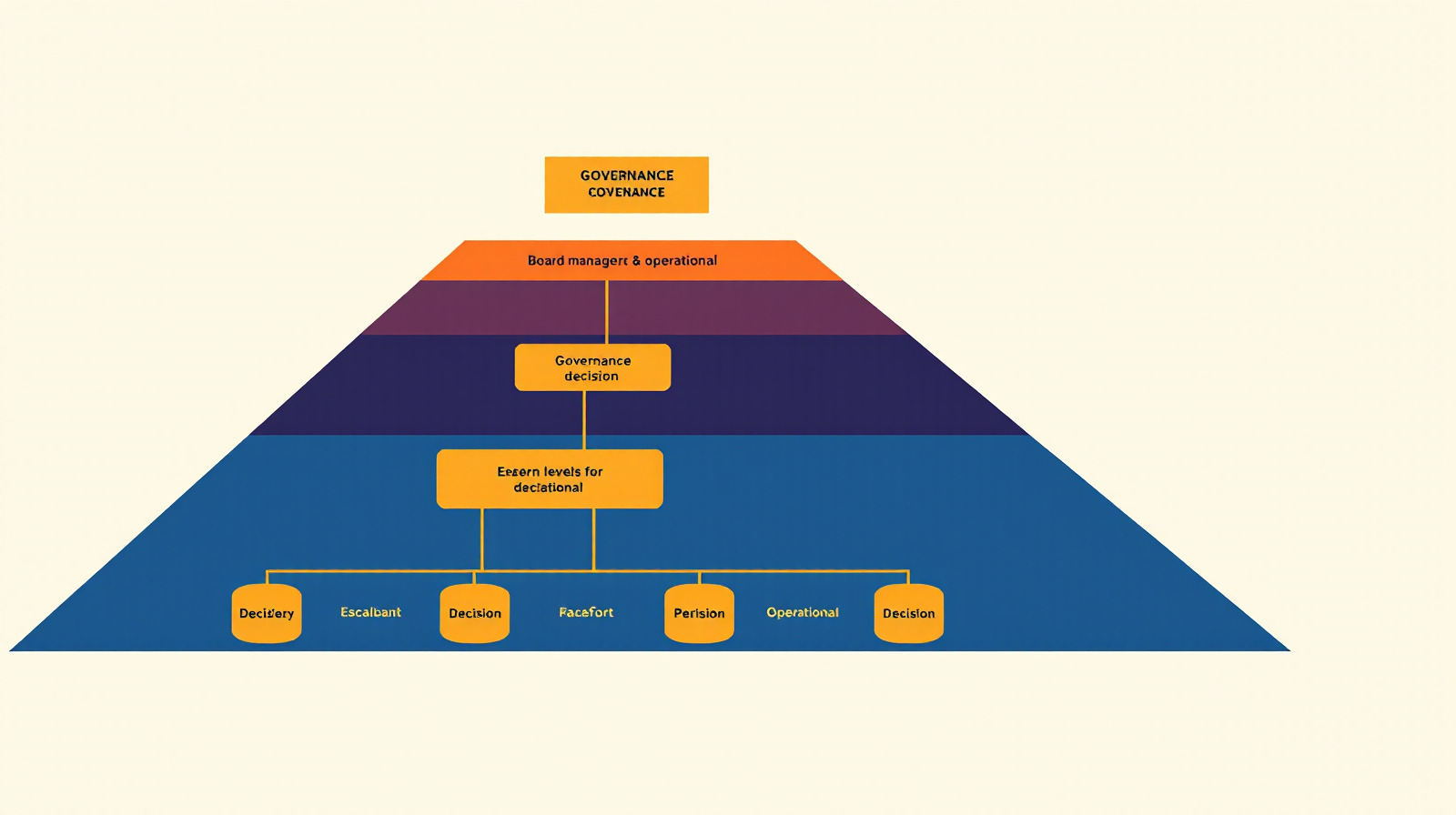
- 28 Apr, 2026
How to Build an AI Data Governance Framework Executives Will Actually Use
Data governance frameworks are one of the most reliably underused artifacts in enterprise AI programs. They get built, often with genuine care and significant effort, and then they get reviewed annually by the compliance team and consulted by nobody else. The problem is not usually the content. The problem is who the framework is written for and how it connects — or fails to connect — to the decisions that actually need to get made. Most data governance frameworks are written for compliance teams. They are thorough, they are precise, and they are not the thing an executive reaches for when they need to decide whether a specific AI use case is appropriate. They are also not the thing a business line manager references when they are trying to figure out whether they can use a new AI tool with client data. An AI data governance framework that actually works does two things differently. It is designed around the decisions that need to happen, not the principles that are supposed to guide them. And it has ownership that is connected to actual authority. Why most frameworks fail to produce decisions The typical AI data governance framework includes a set of principles: data minimization, purpose limitation, appropriate security, transparency in AI use. These principles are correct. They do not produce decisions. When a business line manager wants to deploy an AI tool for a new use case, they need to know: is this approved, under what conditions, and who decides if I am not sure? A principles document does not answer any of those questions. The manager does one of two things: they either escalate to a committee that meets monthly and respond six weeks later, or they proceed without asking because the approval path is too unclear to bother. The outcome of the first path is governance that moves at the wrong pace. The outcome of the second is governance that does not exist in practice. An effective AI data governance framework is built backwards from the decisions that need to get made: what use cases are pre-approved, what use cases require individual review, who conducts that review, and what criteria they apply. The principles inform the criteria, but the framework is organized around the decision structure. The ownership model that actually works Data governance for AI requires ownership at three levels, and the levels need to be connected. Executive sponsor. One member of the executive team owns AI data governance as a responsibility, not as a title. This person ensures the framework is consistent with the organization's risk appetite, resolves escalations that the operational governance structure cannot, and is accountable to the board for the organization's AI data governance posture. Without this person, governance decisions pile up in committee and do not get resolved. Operational owners. The CIO and CTO share operational ownership of the framework — the CIO for data classification, access controls, and compliance with data protection obligations; the CTO for AI system architecture, vendor data terms, and technical controls. These two need to work together consistently, which means shared visibility into AI deployments and a clear division of the decisions that sit with each. Data owners by domain. For each major data category — client data, HR data, financial data, legal material — a specific owner is accountable for decisions about AI use in that domain. This person is not the CIO or CTO; they are typically the head of the business function that owns the data. They approve use cases, review exceptions, and escalate issues that require executive judgment. The framework only works if these three levels are connected through a clear escalation structure and meet at a cadence that matches the pace of AI deployment decisions in the organization. The decision structure: the practical center of the framework The most useful component of any AI data governance framework is a decision matrix: which use cases and data types fall into which approval category. Pre-approved. Use cases that are within defined parameters and require no additional review before deployment. These should be clearly specified: which AI tools, with which data categories, under which conditions, are automatically approved. The goal is to move the routine decisions out of the governance process entirely, so the governance process can focus on the non-routine ones. Expedited review. Use cases that require review but can be processed within a defined short timeframe — five to ten business days. The review criteria should be pre-specified so that the review is a check against criteria rather than a fresh analysis from first principles. Most new use cases should fall here. Full governance review. Use cases involving novel data categories, significant regulatory complexity, or high-sensitivity data that require a more thorough assessment. These should be rare if the pre-approved and expedited categories are well-designed. Prohibited. Use cases that are not permitted under any conditions, or not permitted until specific controls are in place. Making these explicit removes them from the case-by-case decision space. The matrix should be a reference document that people actually consult — short, decision-oriented, updated regularly as the landscape changes. What makes governance visible to executives Executives do not engage with governance frameworks through documentation. They engage through metrics, through escalations, and through the questions they ask in governance meetings. The metrics that matter: how many AI use case reviews were completed in the period, at what pace, with what outcomes? How many active AI deployments have been reviewed under the framework and how many have not? What is the current status of high-risk AI deployments relative to the framework's requirements? These are the questions the executive sponsor should be asking at governance review meetings. If the CIO cannot answer them, the governance program does not have adequate visibility into what is happening. The escalation structure is equally important. When a business line manager hits a governance decision they cannot make at their level, the path to getting an answer needs to be fast and clear. A governance framework that requires a monthly committee meeting to resolve a time-sensitive deployment decision is not fit for the pace at which AI deployment happens. Keeping it current without making it a burden AI data governance frameworks go stale quickly. Vendor terms change. New AI capabilities create new use cases. Regulatory guidance evolves. The framework needs a maintenance mechanism that keeps it current without requiring a major review process every time something changes. The practical approach: designate the operational owners — CIO and CTO — as responsible for maintaining the framework, with a quarterly review cycle and a clear process for minor updates between cycles. The executive sponsor reviews major changes. The board sees an annual summary. The review cycle for specific elements of the framework should be driven by trigger events — a new major AI deployment, a significant regulatory development, a governance incident — rather than purely by calendar. What to take from thisBuild the framework around the decisions that need to happen, not the principles that inform them. A decision matrix that tells people what is pre-approved, what needs review, and what is prohibited is more useful than a comprehensive principles document. Name an executive sponsor with genuine accountability, not an oversight committee with diffuse responsibility. Committees defer decisions; sponsors make them. Data owners by domain need to be part of the governance structure. The head of the business function that owns the data is better positioned to make AI use case decisions for that domain than a central technology function. Build governance metrics into the executive review agenda. If the CIO cannot answer questions about active AI deployment coverage at a governance meeting, the oversight is insufficient. The escalation path from a business line manager to a governance decision needs to be fast enough to match the pace of AI deployment. If the answer takes six weeks, managers will stop asking.The organizations with effective AI data governance are not the ones with the most comprehensive frameworks. They are the ones that have built governance around how decisions actually get made in their organization, rather than how they are supposed to get made according to the framework.
Read full article
- 16 Apr, 2026
When Your AI System Becomes a Source of Competitive Disadvantage
The business case for enterprise AI is almost always framed as an upside story. Productivity gains, quality improvements, faster decision-making, competitive advantage over slower competitors. The framing is not wrong — there are real benefits and they are significant. What tends to be absent from the business case is a honest assessment of the downside scenarios: the ways in which an AI system, poorly designed or inadequately governed, can actively harm the organization's competitive position rather than improve it. This is not a reason to avoid AI investment. It is a reason to think more carefully about the specific failure modes, because they are not obvious and the organizations that encounter them are often surprised by the channel through which the harm arrived. The pricing exposure problem Pricing logic is one of the most commercially sensitive forms of knowledge an organization holds. The rules that govern how deals are priced, what flexibility exists, where the floor is, and how different customer profiles are segmented represent years of market learning that competitors would pay substantially to understand. AI systems connected to CRM data, deal management systems, and pricing tools learn those patterns in the course of normal use. The risk is not necessarily that the AI reveals pricing logic externally — although that is a risk if the system interacts with clients or partners. The risk is that the system, if its access is not carefully controlled, makes the pricing logic accessible in ways that would not otherwise exist. An employee with access to a deal management system could, with effort, reconstruct pricing patterns from individual deals. An AI system with access to the same data can answer "what are the pricing thresholds we typically use for mid-market accounts in this vertical" in seconds. The information was always technically accessible. The AI made it effectively accessible. If that employee later joins a competitor, the information they have internalized about the organization's pricing approach is substantially richer if they worked with an AI system that made it easily queryable than if they worked with raw data that required effort to interpret. Strategy document proliferation Every AI system that helps with document drafting, summarization, and analysis leaves a trail of artifacts: intermediate drafts, summary documents, synthesized analysis, and conversation histories that reflect the strategic content fed into the system. These artifacts accumulate. In most organizations, nobody is managing them. The conversation history from a strategy planning session assisted by an AI tool lives in the tool's logs or in a chat interface export that gets saved to a shared drive with broader permissions than the original strategy documents. The proliferation of strategy artifacts through AI-assisted work is a real exposure. The discipline of handling strategic content carefully — compartmentalized access, appropriate distribution, secure storage — tends to dissolve when people are working fluidly with AI tools and producing artifacts as a natural byproduct. The client relationship surface area Organizations that use AI tools to assist with client work create a specific category of exposure: the AI system's access to client relationship context becomes a surface area through which client-sensitive information can migrate. This matters most in two scenarios. First, when employees who have worked with client information through an AI tool leave the organization — the contextual knowledge they take with them is richer because the AI made it more accessible and easier to process. Second, when the AI tool itself, through the mechanism of vendor data handling, creates a record of client relationship context that exists outside the organization's control. Neither of these is a dramatic failure. They are the kind of slow-building exposure that does not create a single incident but changes the risk profile of the organization's competitive position over time. The output channel problem AI systems increasingly generate content that goes directly to external audiences: customer communications, partner correspondence, market-facing materials. When the prompts that generate this content incorporate internal context, and when the review process is lighter than it would be for human-drafted content, the outputs can inadvertently reveal internal information. I have seen this manifest specifically in three ways. AI-drafted client proposals that reflected internal pricing rationale in the justification language. AI-generated market commentary that incorporated internal strategic positioning that had not been publicly disclosed. AI-assisted responses to procurement questionnaires that revealed internal capability assessments that were intended to be held back. In each case, the AI was using available context to produce more relevant output. That is the tool doing what it was designed to do. The failure was in the review process — human review was lighter because the AI-generated output looked professional and well-structured, and nobody caught the inadvertent disclosure. The dependency risk and what it does to negotiating position An organization that has deeply integrated a single AI vendor into core business workflows has a different negotiating position with that vendor than one that has maintained optionality. The vendor knows this. This is not unique to AI — the same dynamic applies to any deeply integrated enterprise technology relationship. But AI integration tends to be faster and deeper than traditional enterprise software, and the switching costs can accumulate before anyone has explicitly thought about what the dependency looks like. The competitive disadvantage here is not in what the AI system reveals — it is in the negotiating position the organization finds itself in at contract renewal, and in the operational exposure if the vendor relationship is disrupted. Turning the analysis into a practical question The practical question for a CTO and CFO is not "does AI create competitive risk" — the answer is yes in the ways described, and also yes it creates competitive advantage. The question is whether the specific deployment decisions being made have been evaluated against both sides. A few questions worth asking before the next AI deployment decision: What internal knowledge does this system have access to, and what would a competitor pay to know it? This is the most direct framing for pricing, strategy, and client relationship exposure. What artifacts does this system produce, how are they stored, and who has access to them? The artifact proliferation risk is almost never considered in deployment planning. What external outputs does this system generate, and what review process exists for catching inadvertent disclosures? The review discipline for AI-assisted outputs tends to be lower than for human-drafted equivalents. What would the organization's competitive position look like if a key employee who worked with this system extensively moved to a direct competitor? The answer to that question reflects the degree of competitive exposure the system creates. What to take from thisPricing logic made easily queryable through AI is more vulnerable to retention and misuse than pricing logic that required effort to extract. Scope AI access to pricing systems deliberately. AI-assisted work produces artifacts — conversation histories, intermediate summaries, synthesized documents — that tend not to be managed with the care applied to primary strategy documents. Build artifact handling into the governance model. AI-generated external content requires review discipline that is often lower than human-drafted content gets. The professional appearance of AI output does not mean it is free of inadvertent disclosure. Deep AI vendor integration creates switching costs and dependency that affect negotiating position. Evaluate this explicitly in vendor strategy. Ask explicitly: what would a competitor need to know about this system's data access to understand our strategic position? The answer identifies the highest-priority access controls.
Read full article
- 26 Mar, 2026
Who Owns the Output When AI Is Involved in Creating It
The intellectual property implications of AI-generated work are evolving faster than most enterprise legal functions are tracking them. Which is fine, up to a point — the law is unsettled, the cases are still working through the courts, and waiting for complete clarity is not unreasonable. What is not fine is deploying AI tools across an organization without any position on who owns the outputs, because that position becomes relevant faster than most executives expect. The question comes up in client relationships, in employment contexts, in insurance claims, and in competitive disputes. Organizations that have thought about it are not scrambling when it does. Here is the landscape as it actually stands, along with what a CTO and CFO need to think through before the question arrives in a meeting where nobody has a prepared answer. The ownership question has three distinct layers The organization versus the employee. When an employee uses a company AI tool to produce work within the scope of their employment, the analysis is the same as for any work-for-hire context. The organization owns it. This is the standard employment law position in most jurisdictions, and AI involvement does not change the underlying analysis. Where it gets complicated: employees who use personal AI tools for work-related outputs, or who produce outputs outside the narrow scope of what their employment agreement covers, enter a greyer territory. Most organizations have not updated their employment agreements to address AI tool use, which creates uncertainty that a court would have to resolve through interpretation. The organization versus the AI vendor. This is where the terms of the vendor agreement matter most. Most enterprise AI vendor agreements include a provision that the customer owns the outputs of the model for their use case — the vendor does not claim ownership of the response the model generates in response to your prompt. However, the terms around outputs that are similar to training data, outputs that are based on copyrighted material in the training set, or outputs that incorporate elements the vendor characterizes as "system prompts" or proprietary model content can create complications. Read the intellectual property terms in any AI vendor agreement with the same care you would apply to any licensing agreement. The organization versus third parties. This is the most uncertain area, and the one with the most long-term significance. Copyright law in most jurisdictions requires some element of human creative authorship to establish protectable intellectual property. Work produced entirely by a machine without meaningful human creative input has not, as a matter of established law in the US and most European jurisdictions, been treated as eligible for copyright protection. The cases are still developing, and the line between "some human input" and "meaningful human creative authorship" is actively being litigated. The practical implication: outputs produced by an AI model with minimal human creative contribution may not be protectable as intellectual property in the traditional sense. For a strategy document or a software codebase that the organization wants to protect, the degree of human contribution matters. Why this matters for client deliverables The ownership question is most immediately commercial in the context of client work. When an organization produces deliverables for clients — reports, analyses, software, designs — the client typically expects to own those deliverables or to have an exclusive license to use them. The contract between the parties usually addresses this. What the contract usually does not address is what happens when a significant portion of the deliverable was generated by an AI model. The client agreement may be silent on AI involvement. The confidentiality terms may not contemplate that work product involves client-provided context being fed to a third-party model. The intellectual property provisions may not map cleanly onto outputs where the chain of creation is partly human and partly machine. Clients are starting to ask about this. I have seen RFPs in the past year that explicitly ask vendors to disclose their AI tool usage and to confirm how AI-generated content in deliverables is handled. Organizations that have a clear answer to that question are in a better position than those who are formulating one on the spot. The minimum required: a position on what AI tool use in client delivery means for the intellectual property representations in client agreements, and a process for updating those agreements where the existing provisions are silent or inconsistent. The employment dimension Employment agreements and IP assignment clauses typically assign to the employer all work produced by the employee within the scope of their employment using the employer's tools and resources. This is largely settled territory. What is less settled: what happens when an employee's use of an AI tool includes significant proprietary inputs — their own prior knowledge, creative direction, iterative refinement — that meaningfully shaped the output. In contexts where the employee later leaves and the organization wants to assert ownership over work they produced with AI assistance, or where the employee wants to carry forward work they produced partly through their own creative direction, the existing assignment clause may not cleanly resolve the question. This is a future risk more than a current crisis. But organizations with significant intellectual property value in AI-assisted outputs would do well to review their employment agreement IP provisions now rather than when the question is contested. The insurance and indemnification question Some AI vendors offer indemnification against copyright infringement claims for outputs produced by their models, under specific conditions. These indemnification provisions are not universal, they typically exclude certain use cases, and their practical value depends on the financial standing and legal commitments of the vendor. But they are worth understanding if intellectual property risk is material to your use case. Similarly, the organization's existing intellectual property and technology errors and omissions insurance coverage may or may not extend to claims arising from AI-generated work. This is worth checking before an issue arises rather than after. The CFO should understand the liability exposure explicitly: what is the organization's position if a third party claims copyright infringement in AI-generated output, and what coverage exists? Building a position before you need it An organization-wide AI tool deployment without a worked-out IP position is not a stable state. Here is the minimum viable position a CTO and CFO should have before the question arrives: Ownership of outputs produced by employees using enterprise-licensed AI tools within the scope of their employment — straightforward, employer owns it, codify this in acceptable use policy. Ownership representations to clients — review existing client agreement templates and update IP provisions to address AI-assisted work product. The disclosure and ownership questions need to be addressed explicitly rather than defaulted to existing provisions that predate AI. Copyright eligibility threshold — for outputs where intellectual property protection matters, establish a guideline for the level of human creative contribution required. "We used AI as a drafting tool and reviewed, edited, and refined the output" is defensible. "We copied the AI output unchanged" is not. Vendor indemnification review — understand what indemnification the vendor offers, under what conditions, and whether it applies to your material use cases. What to take from thisEmployment law generally means organizations own AI-assisted work produced by employees in the scope of their employment using company tools. But most employment agreements have not been updated to reflect AI tool use — review and update them. Client agreements typically do not address AI involvement in deliverables. Update the IP provisions in client agreement templates before clients start asking. Outputs produced with minimal human creative contribution may not be copyright-protectable. For valuable outputs, establish a standard for human creative contribution. Review what indemnification AI vendors offer against copyright claims, and check whether existing IP and technology insurance coverage extends to AI-generated outputs. Get a position on these questions before they arise in a client meeting or a dispute. Formulating the position under pressure produces worse answers than thinking through it in advance.The intellectual property implications of AI are uncertain in ways that will not be fully resolved for years. That does not mean organizations have to wait. It means they need a defensible position — one that reflects the available guidance, acknowledges the uncertainty honestly, and can be explained clearly when someone asks.
Read full article